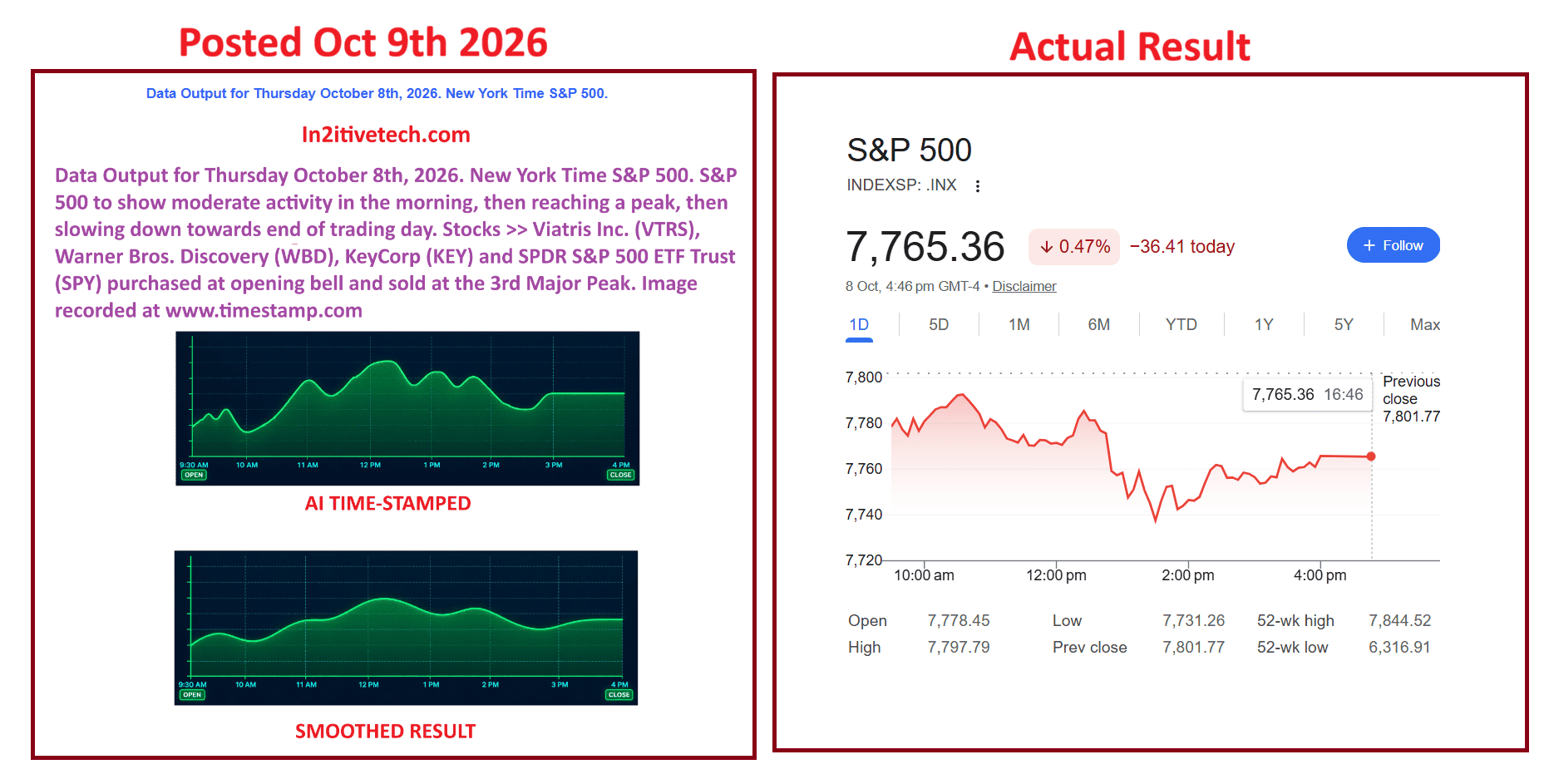
Result: Fail
Ok. So for the first time in months
we broke our 100% perfect formation streak. The good news is we believe
we have found the reason for this failure. This failure was attributed
to the
fact that geomagnetic readings were slightly out of the
sweet spot range. Also the S&P 500 had just had a roaring week a
few days prior, representing an oversold market, where geomagnetic
activity was in the sweet spot of 12 during this time. Hence it may be
when the market is oversold, as the sweet spot declines the accuracy in
this technology declines. There are 3 more tests until the final
program ends in December, so to finally confirm the hypothesis that
exceedingly high geomagnetic readings are creating major interference,
we will be using real time geomagnetic forecast readings before each
time the equipment is activated.
Geomagnetic Forecast Data
https://www.spaceweather.gov/products/3-day-forecast
https://www.spaceweather.gov/products/wsa-enlil-solar-wind-prediction
https://www.sws.bom.gov.au
https://www.spaceweather.gov/products/27-day-outlook-107-cm-radio-flux-and-geomagnetic-indices
When we take a look at the real time geomagnetic activity that took
place when the equipment was activated we see a huge KP storm. The
effects of this must have been so strong they rippled back through time
to the date the equipment was operated, causing the failure.
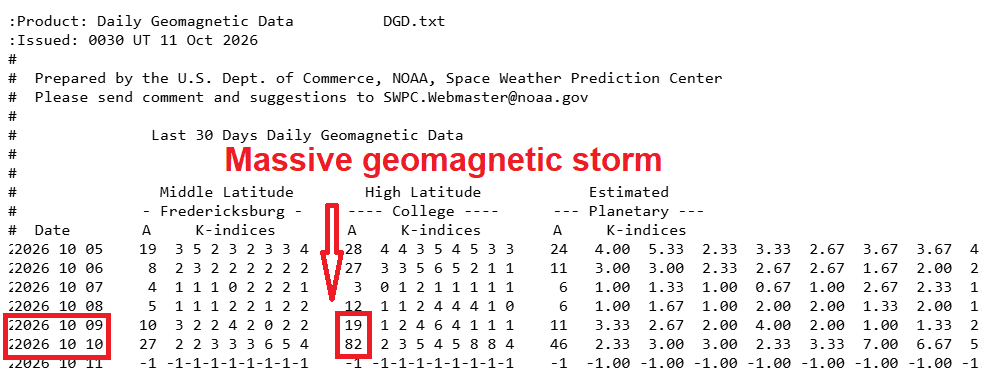
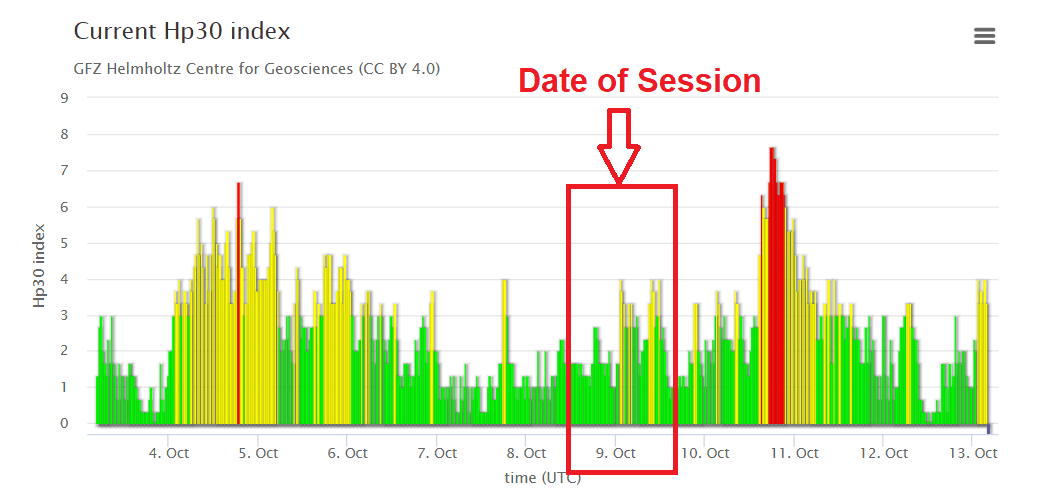
As shown, this was the largest geomagnetic storm occuring for the
previous 30 days. Years of experience has taught us that whenever there
is major geomagnetic activity occuring within the next 3 days of the
time the equipment is activated, the results are always negative
because this puts out lots of interferrence.
This
proves that when the geomagnetic readings are in the sweet spot range
results are almost perfect. This proves that earth's geomagnetic field
influences our subconscious mind. The way we receive information from
future events may be due to the fact that we are conduits or vessels
for information which passes through our subconscious mind. Reviewing almost 3 years of Associative
Remote Viewing Stock Market Data, including 1 year of using the PSI
Chips, we get the following results:
Using the High
Latitude College Indice Number
https://www.ngdc.noaa.gov/stp/space-weather/swpc-products/annual_reports/daily_solar_indices_summaries/daily_geomagnetic_data/
Data over the approximate 3 year
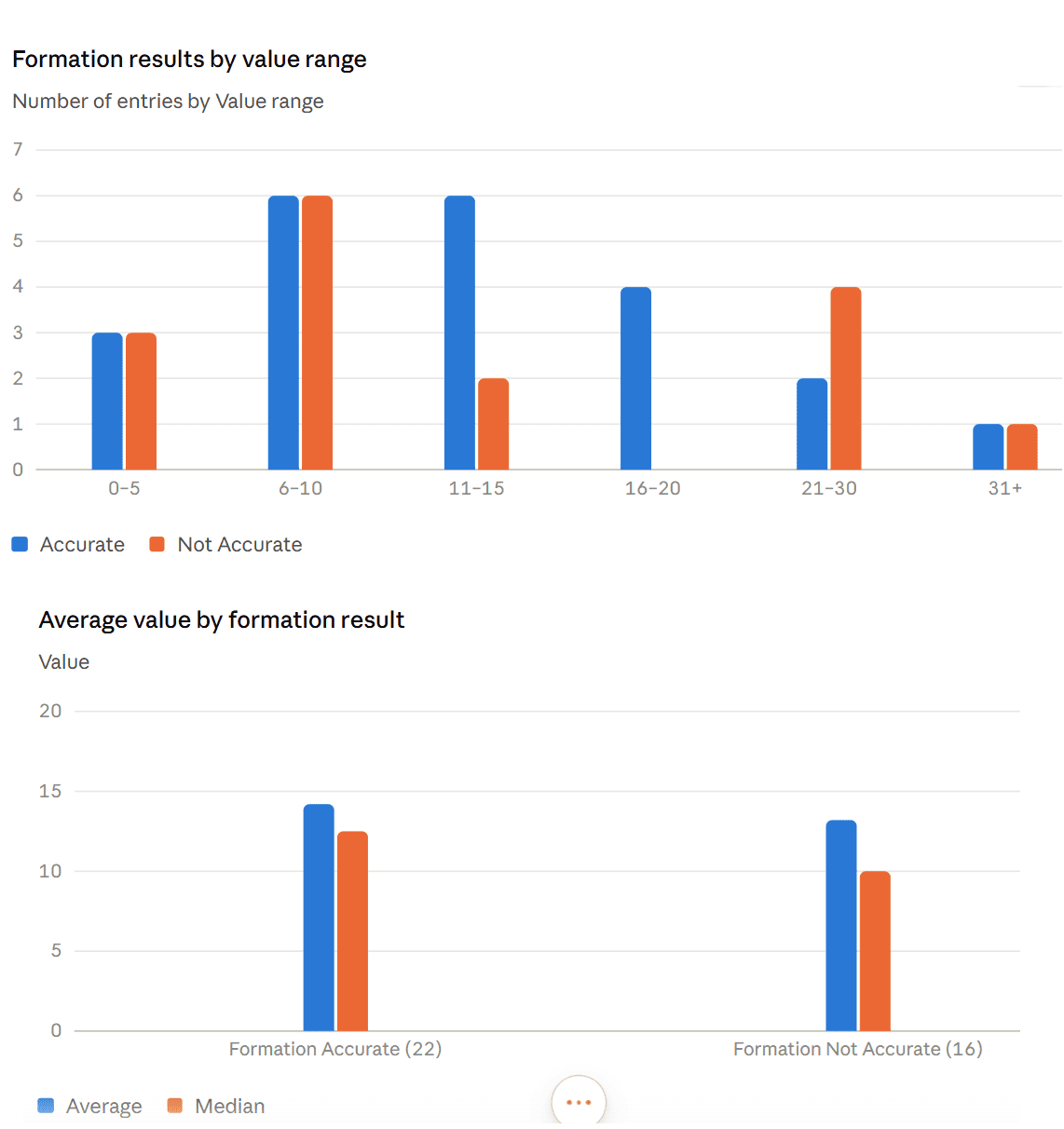
range documenting 38 Associative Remote Viewing Sessions shows that the
"sweet
spot" for the High
Latitude College Indice Number is between 11 and 20, centred
near the accurate
average of about 14.
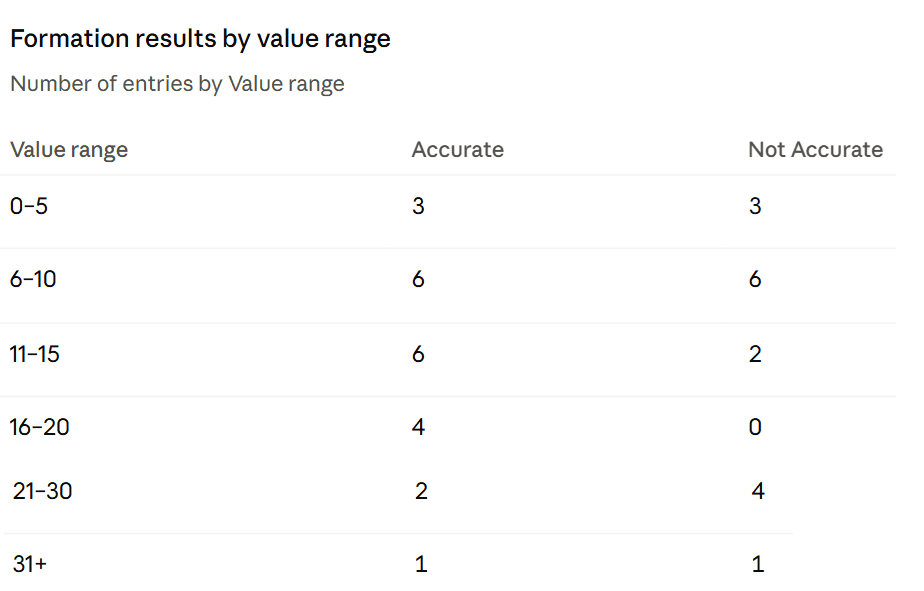
On average, the 11 to 20 range is
where
accurate results concentrate: 10 accurate against 2 not accurate, about
83%. All four entries from 16 to 20 were accurate. The 6 to 10 range
has
just as many accurate entries, but it also has as many inaccurate ones,
so it is a coin flip. Above 20, inaccurate results outnumber accurate
ones. The single most frequent accurate value is 8, with four accurate
results and one inaccurate. Overall, the best results cluster between
11 and 20, centred near the accurate average of about 14.
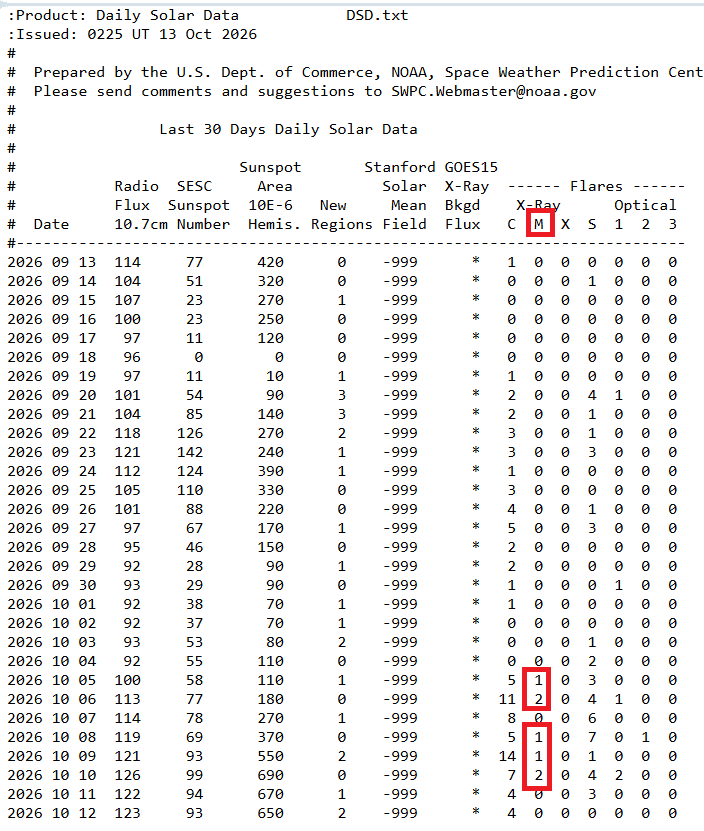
M
Class Solar Flares
The most telling sign was there were
numerous M class flares a few days before as well as in the coming
days. Unlike the C class solar flares which are very mild, the M class
flares are very powerful and create a lot of geomagnetic
activity. Future protocols will be desiged to check these before
the sessions commence, or re-schedule the session if M class flares are
present or could occur in the near future. This is because the forecasted geomagnetic activity does not display this when M class flares
occur.
Reference
https://services.swpc.noaa.gov/text/daily-solar-indices.txt
Lunar Phase
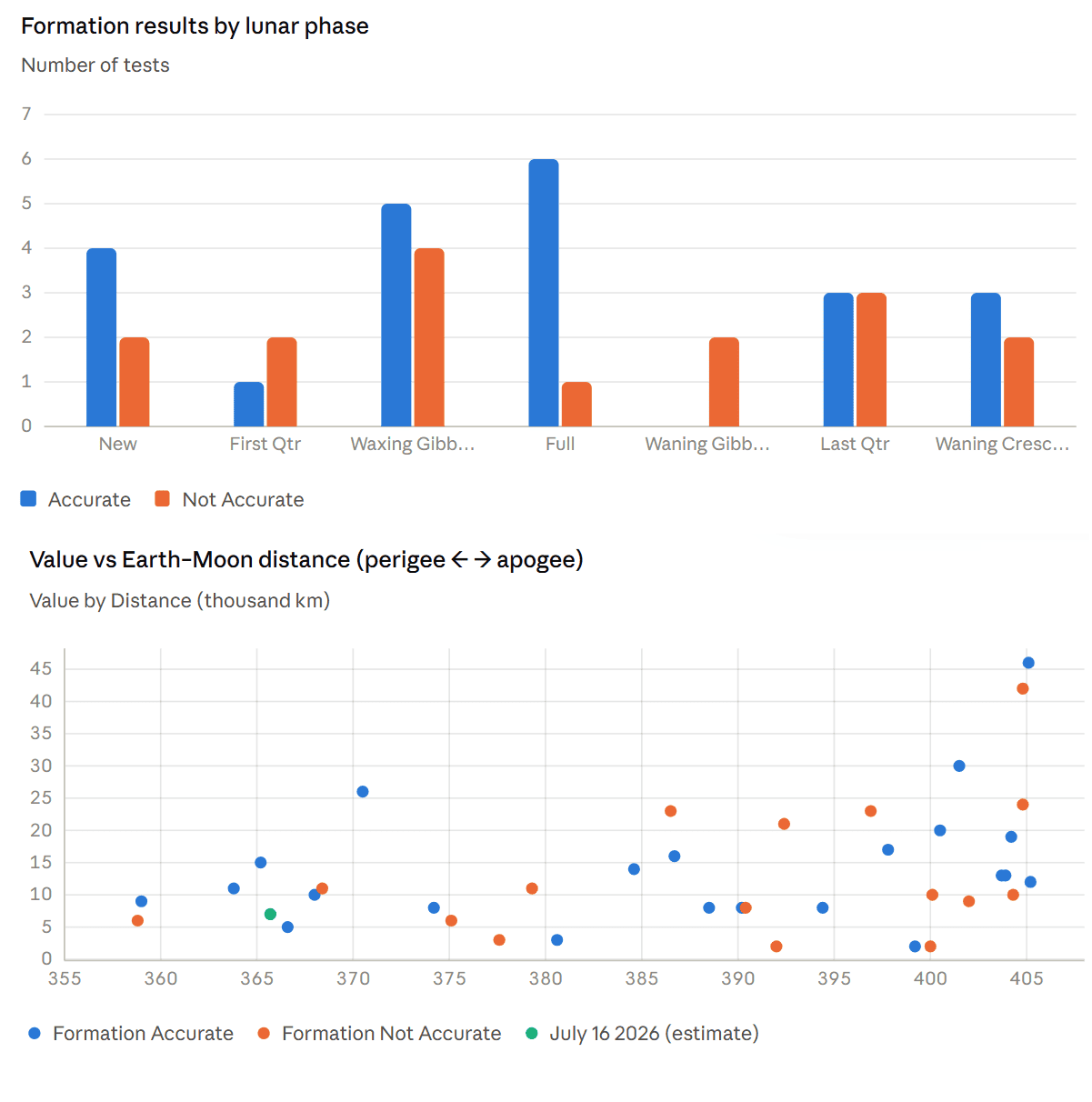
Accurate results cluster in two
places: just before Full Moon and around New Moon.
Moon Apogee and
Perigee (distance the moon is from the earth)
On its own, distance does not separate
the results. Accurate tests made up 7 of 12 near perigee (under 380,000
km) and 9 of 16 near apogee (over 395,000 km), roughly the same share.
Three test dates fell within about
two days of a supermoon, using the common cutoff of under 360,000 km at
New or Full Moon. All three were Super New Moons, which are not visible:
8 Apr 2024 (value 9) was accurate. It
fell on the day of the Super New Moon, 359,807 km away.
10 Apr 2024 (value 11) was accurate,
two days after the same Super New Moon.
31 Mar 2025 (value 6) was not
accurate. It came two days after the 29 Mar Super New Moon, 358,691 km
away.
None
of the dates was near a Super Full Moon. Two accurate dates also
fell on total solar eclipses: 8 Apr 2024 and 12 Aug 2026.
Overall, phase matters more than
distance in this data. Full Moon and New Moon have the best accuracy
rates, while apogee versus perigee shows no real difference. With 38
tests, these patterns are suggestive, not conclusive.
In Summary, the PSI Chips are acting
as an amplifier. When geomagnetic activity is in the sweet range the
results are spectacular, when not, the results are a spectacular
disaster.
In
summary the best model we have so far is:
Other benefical
conditions include
- During Time-Gate Week
- Solar Eclipses
- Just before Full Moon and around New Moon
- At 13:30LST Time
The full data analysis dates for the
above, including links to the approximate last 3 years worth of
associative remote viewing data are included in his research report.
There are a number of well respected
scientific published studies documenting the effects of geomagnetic
activity on the human nervous system:
The Global Coherence Initiative:
Creating a Coherent Planetary Standing Wave
https://pmc.ncbi.nlm.nih.gov/articles/PMC3833489/
Global Coherence Research:
Human-Earth Interconnectivity
https://www.heartmath.org/research/science-of-the-heart/global-coherence-research/
HeartMath researchers analyzed
magnetic field flux gate data from two Geostationary Operational
Environmental Satellites (GOES-8 and GOES-10). They reported a
significant spike in magnetic field variability starting on the morning
of September 11, 2001, which they attributed to a global surge of human
emotional stress and mass consciousness focus.
McCraty, R. (2004). "The Energetic
Heart: Bioelectromagnetic Interactions Within and Between People."
HeartMath Research Center Report.
https://www.heartmath.org/research/science-of-the-heart/global-coherence-research/
Core Focus: Examines 31-day
continuous monitoring of Heart Rate Variability (HRV) in human
subjects, reporting statistical correlations between autonomic nervous
system rhythms and low-frequency geomagnetic field variations.
McCraty, R., Atkinson, M., Stolc, V.,
Alabdulgader, A. A., Vainoras, A., & Ragulskis, M. (2017).
"Synchronization of Human Autonomic Nervous System Rhythms with
Geomagnetic Activity in Human Subjects." International Journal of
Environmental Research and Public Health, 14(7), 770.
https://www.mdpi.com/1660-4601/14/7/770
Core Focus: Evaluates HRV changes in
participants relative to space weather indices ($Kp$, $Ap$, and solar
wind speed), asserting that human cardiovascular dynamics track
environmental magnetic fields.
Alabdulgader, A., McCraty, R., et al.
(2018). "Long-Term Study of Heart Rate Variability Responses to Changes
in the Solar and Geomagnetic Environment." Scientific Reports, 8, 2663.
https://doi.org/10.1038/s41598-018-20932-x
Reviews epidemiological data linking
geomagnetic storms to cardiovascular hospital admissions and circadian
disruption. Reviews epidemiological data linking geomagnetic storms to
cardiovascular hospital admissions and circadian disruption. Palmer, S.
J., Rycroft, M. J., & Cermack, M. (2006)
https://www.google.com/search?q=https://doi.org/10.1007/s10712-006-9010-7
Analyzed physiological metrics in
healthy subjects across varying space weather conditions, finding
autonomic shifts during high geomagnetic activity.
Babayev, E. S., & Allahverdiyeva,
A. A. (2007) Effects of geomagnetic activity
variations on the physiological and psychological state... (Advances in
Space Research)
https://www.google.com/search?q=https://doi.org/10.1016/j.asr.2007.02.046
Evaluated correlations between global
geomagnetic indices and sudden cardiac death rates across multi-decade
temporal datasets.
St-Pierre, L. S. / Stoupel, E., et
al. (2008/2002) Sudden cardiac death and geomagnetic
activity (International Journal of Biometeorology)
https://www.google.com/search?q=https://doi.org/10.1007/s00484-008-0146-5
Looking at our historical data for
Estimated Planetary K-Indices we shall interpret the data as follows:
Date
is the day of the ARV session
>>
# >> is the High Latitude College Indice Number
taken from the NOAA Historical Geomagnetic Index Activity
https://www.ngdc.noaa.gov/stp/space-weather/swpc-products/annual_reports/daily_solar_indices_summaries/daily_geomagnetic_data/
Formation
is where the ARV session yielded a positive formation in that the
overall drawing was accurate enough similar to the actual S&P 500
activity.
2026 Data Archive
https://www.in2itivetech.com/year_2026_psi_chip_tech.html
Oct 9th >> (awaiting data)
>> Formation Not Accurate
Sept 9th >> 26 >>
Formation Accurate
https://www.in2itivetech.com/FINAL_TESTING/sepst_2026.html
Aug 12th >> 15 >>
Formation Accurate
https://www.in2itivetech.com/FINAL_TESTING/august_2026.html
July 16th >> UNK >>
Formation Accurate (NOAA did not post data for this date) Estimated to
be in the range of >>> 7 >>>
https://www.in2itivetech.com/FINAL_TESTING/july_2026_tech_demonstration.html
June 23rd >> 8 >>
Formation Accurate
https://www.in2itivetech.com/FINAL_TESTING/june_2026_tech_demonstration.html
May 1st >> 20 >>
Formation Accurate
https://www.in2itivetech.com/FINAL_TESTING/may_2026_tech_demonstration.html
April 1st >> 8 >>
Formation Accurate
https://www.in2itivetech.com/beta_tests_into_pre_trial_runs/early_april_2026.html
April 30th >> 17 >>
Formation Accurate
https://www.in2itivetech.com/FINAL_TESTING/may_2026_tech_demonstration.html
March 2nd >> 3 >>
Formation not Accurate
https://www.in2itivetech.com/beta_tests_into_pre_trial_runs/early_march_2026.html
March 31st >> 16 >>
Formation Accurate
https://www.in2itivetech.com/beta_tests_into_pre_trial_runs/early_april_2026.html
Feb 10th >> 10 >>
Formation not Accurate
https://www.in2itivetech.com/beta_tests_into_pre_trial_runs/feb_18_2026.html
Feb 5th >> 23 >>
Formation not Accurate
https://www.in2itivetech.com/feb_2026.html
Jan 8th >> 15 >> Success
in choosing stocks (early chip research)
https://www.in2itivetech.com/2026.html
2025 Data Archive
https://www.in2itivetech.com/history.html
May 9th >> 24 >>
Formation Not Accurate
https://in2itivetech.com/beta_tests_into_pre_trial_runs/in_depth_fri_may_25.html
April 10th >> 30 >>
Formation Accurate
https://in2itivetech.com/in_depth_fri_apr_25.html
March 31st >> 6 >>
Formation not Accurate
https://www.in2itivetech.com/beta_test_march_25.html
March 19th >> 42 >>
Formation Not Accurate
https://www.in2itivetech.com/beta_31.html
Feb 19th >> 19 >>
Formation Accurate
https://www.in2itivetech.com/beta_30.html
Jan 23rd >> 9 >>
Formation not Accurate
https://www.in2itivetech.com/beta_29.html
2024 Data Archive
https://www.in2itivetech.com/history.html
Dec 27th >> 2 >>
Formation not Accurate
https://in2itivetech.com/beta_tests_into_pre_trial_runs/beta_28.html
Dec 3rd >> 8 >> Formation
not Accurate
https://in2itivetech.com/beta_tests_into_pre_trial_runs/beta_27.html
November 26th >> 12 >>
Formation Accurate
https://in2itivetech.com/beta_tests_into_pre_trial_runs/beta_26.html
August 16th >> 11 >>
Formation Not Accurate
https://www.in2itivetech.com/beta_23_24.html
July 19th >> 3 >>
Formation Accurate
https://www.in2itivetech.com/beta_23_24.html
June 20th >> 8 >>
Formation Accurate
https://www.in2itivetech.com/beta_tests_second_moedule.html
June 18th >> 23 >>
Formation Not Accurate
https://www.in2itivetech.com/beta_tests_second_moedule.html
June 3rd >> 11 >>
Formation Not Accurate
https://www.in2itivetech.com/beta_tests_second_moedule.html
May 23rd >> 21 >>
Formation Not Accurate
https://www.in2itivetech.com/beta_tests_second_moedule.html
May 21st >> 2 >>
Formation Accurate
https://www.in2itivetech.com/beta_tests_second_moedule.html
May 19th >> 13 >>
Formation Accurate
https://www.in2itivetech.com/beta_tests_second_moedule.html
May 15th >> 10 >>
Formation Not Accurate
https://www.in2itivetech.com/beta_tests_second_moedule.html
May 8th >> 5 >> Formation
Accurate
https://www.in2itivetech.com/beta_tests_second_moedule.html
May 3rd >> 10 >>
Formation Accurate
https://www.in2itivetech.com/beta_tests_second_moedule.html
May 1st >> 6 >> Formation
Not Accurate
https://www.in2itivetech.com/navigation_history.html
April 22nd >> 13 >>
Formation Accurate
https://www.in2itivetech.com/navigation_history.html
April 19th >> 46 >>
Formation Accurate
https://www.in2itivetech.com/navigation_history.html
April 15th>> 2 >>
Formation Not Accurate
https://www.in2itivetech.com/navigation_history.html
April 10th >> 11 >>
Formation Accurate
https://www.in2itivetech.com/navigation_history.html
April 8th >> 9 >>
Formation Accurate
https://www.in2itivetech.com/navigation_history.html
April 1st >> 14 >>
Formation Accurate
https://www.in2itivetech.com/navigation_history.html
April 3rd >> 8 >>
Formation Accurate
https://www.in2itivetech.com/navigation_history.html
Master Reference Used:
NOAA Master Daily Geomagnetic Archive
https://www.ngdc.noaa.gov/stp/space-weather/swpc-products/annual_reports/daily_solar_indices_summaries/daily_geomagnetic_data/
Go to November Time-Gate
